


“I think people should learn that us Indigenous people are just like everyone else — we just happen to have different history than you,” these are the words of Taylor Netland, a member of the Winona State University Turtle Island Student Organization (TISO), who is just one of many indigenous people who have faced the consequences of the actions of other people. “TISO and I have worked to host Nicky Buck in the Indigenous Learning Garden for a lecture “People, Plants, and Food Sovereignty.” We have been able to attend HDP crafting circles,” Mary Jo Klinker, program director for the Women’s, Gender, & Sexuality Studies Department and advisor to TISO, explained.
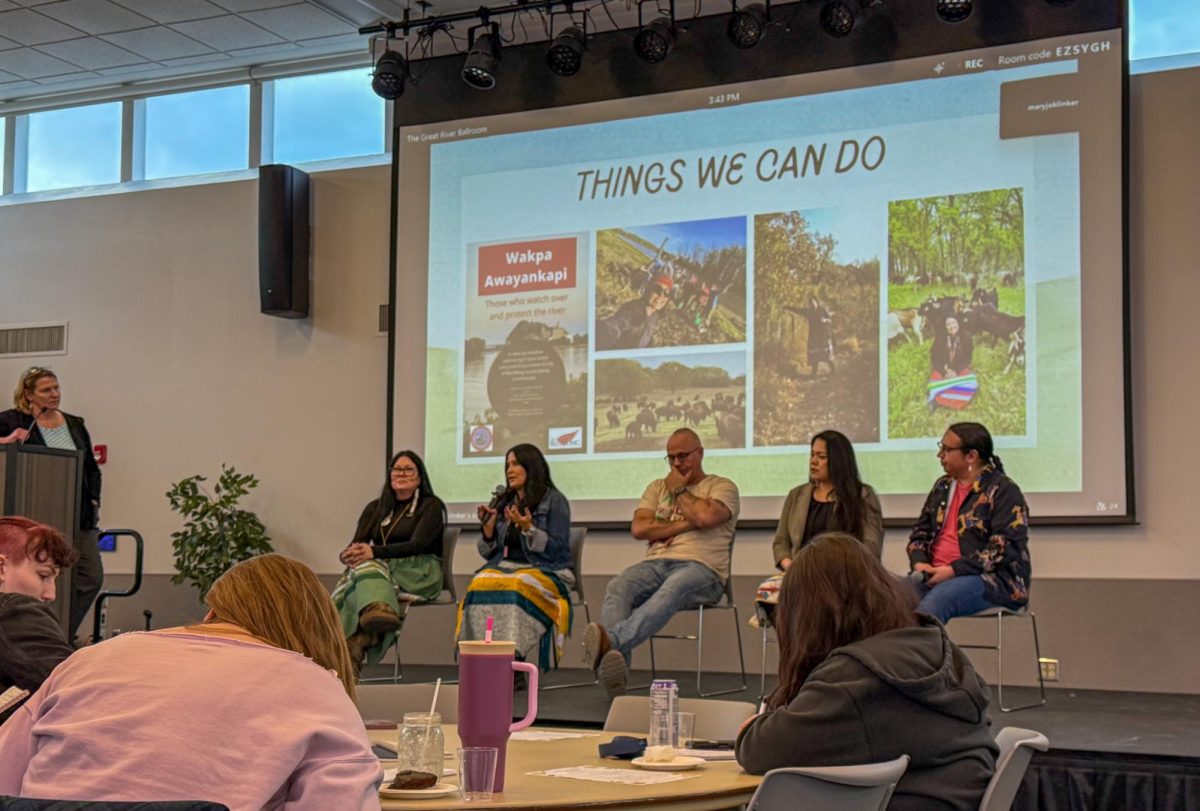
The Honoring Dakota Project provided the students of Winona State with the wonderful opportunity for cultural competency training. Barry Hand, Shelley Buck, Cole “Redhorse” Taylor, Kahomy Weston, and Nicky Buck, the director of The Honoring Dakota Project, gave eye opening presentations over the course of the entire three hour training.
The common consensus surrounding the people indigenous to America is that they were victim to genocide, assault, disease, the theft of their land and culture. All of that is true, a horrifying truth, but none the less real. But what often gets left behind is all of the people who fought for their right to exist in a world that fought tooth and nail to destroy them. One of the biggest things this training showed is that the culture of this land’s indigenous people is still alive. They are still alive and still fighting for their right to exist in their own space and have their culture.
There was a lot of destruction done to indigenous culture and indigenous land. This is an undeniable fact that was woven throughout each presentation. It could be sensed in the passion of people’s voices, the pain of loss and the community of the people on stage. The passion and loss was especially raw and evident when Nicky Buck got choked up talking about the destruction of her people’s land for the purpose of robbing her of her natural resources.
Unci Maka (meaning Grandmother Earth). We are all connected to the earth regardless of how someone views it. And something to take away from Shelley Buck’s presentation is to think of how your actions will affect the next seven generations. Life is about the now, but it’s also about the later.
One of the biggest parts of indigenous culture is art and that was reflected on at this powerful event. “Art is woven into our genes,” Kahomy Weston said. Both she and Taylor shared their experience with art and the significance it has to them and their people.
Taylor shared many indigenous art pieces that are unfortunately in museums, which have vastly intricate details. The Iyokopa (a cradle board) was intricately designed, their clothing was fashionable and expertly attended to, their knife sheathes meant to hold a weapon were beautifully designed, even dolls meant for children had an incredible attention to detail.
There were so many valuable things discussed throughout the entire three hours that one article alone cannot express it all. But remember that Winona State sits upon the land of the Dakota people; Mni Sota itself is a Dakota word. Much like how art is woven into indigenous culture, the same indigenous peoples are woven into the land on which Winona State and every person stands. It’s important to keep the words of Hand in mind when you go out into the world “wide eyed, wide mind, big heart.”