


In the modern world, there are norms of gender and sexuality, and many are free to be who they want to be. Some people think this is a purely modern concept, and those people would be mistaken, but even some who understand this don’t always realize just how far back it goes. People often look back to the 80s, 90s or go all the way back to ancient times in other countries of the world. But most Americans don’t know or acknowledge that the very idea of a gender binary was not the foundation of the very land they stand on.
While the history may difficult to track down, there are historical accounts of Two-Spirit people. Being Two-Spirit means someone was born with both the male and female spirit in them. However, some people don’t connect as much with that definition because it subscribes to the gender binary. But the fact of the matter is, Two-Spirit people have existed in Indigenous culture for centuries, and no amount of cultural destruction can erase that. While Two-Spirit is similar in concept to other gender identities, Two-Spirit is specific to indigenous people. The term Indigiqueer was created to explain the way queer indigenous people experience the wider world.
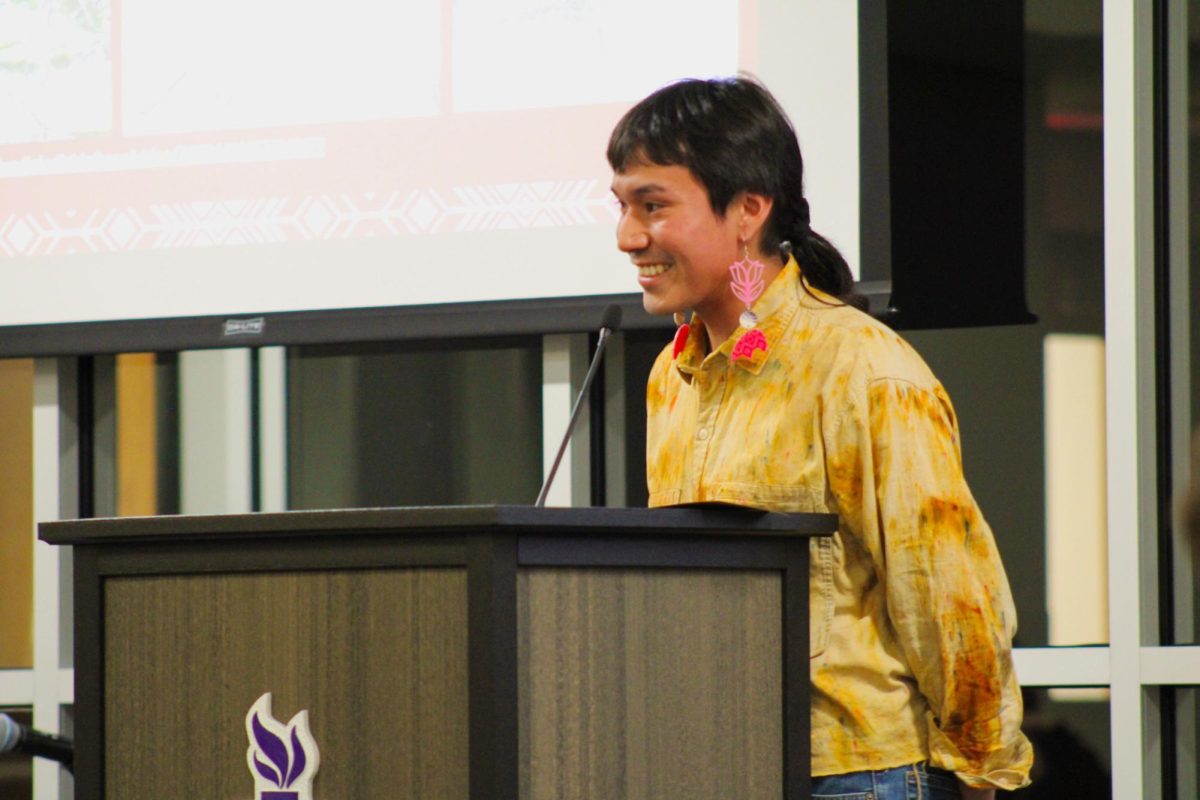
Giiwedin is a Two-Spirit influencer, though they don’t refer themself as an influencer. While this identity is a core part of who Giiwedin is, it’s not the only thing about them. Giiwedin does art, and good art at that. An art form they have just started working with is birch bark biting, which is something that was discovered from children initially. As Giiwedin explained it, some men witnessed babies chewing on bark for teething, and realized that they too, could use their teeth to make indents in the bark. And after much trial and error the art form of birch biting was born, but that’s not all Giiwedin makes. They also draw, which has a common motif of water. Like with most artists, their identity and experience affect their art. Giiwedin means ‘Northwind’, but they’ve always connected with water, “I like to think of my Two-Spiritness as being very fluid and water is fluid and like that. Connection with, like those water beings like mermaids and like frogs and other things,” shared Giiwedin.
Water is a force of life for many things, people, animals and plants. One plant that heavily relies on water by growing in it is wild rice, which just happens to be important to Giiwedin and Ojibwe culture. Real, authentic manoomin (wild rice) cost so much per pound because the process to get it ready to eat is a labor intensive practice. Not only do you have to knock the rice into a boat to collect it. Once you have it, that’s not the end of the process, it needs to dry and it also needs to be heated over a fire to parch it, which can take 20 minutes to an hour. Once that’s done you dance on the rice to get the husks loose. Then you finally reach the last step, which is the separation of the rice from the husk. Then, and only then, is the rice really ready. It’s a process that Giiwedin is familiar with as they have done it a number of times. Though not without making the mistake of using a plastic tarp during their first stomping on the rice. One of the interesting things about manoonin and also mandaamin (corn) are that they have both male and female structures. Because of this Giiwedin feels a strong connection to both of them. Giiwedin has been able to reclaim 8.66 acres on which they can use to make manoonin, and teach others the value of their culture.
Jennifer Anderson, Chair of the Indigenous Relations, Education, and Programming (IREP) committee declared,
“If you are interested in Indigenous issues, you can get involved with this work through the Turtle Island Student Organization. TISO is Indigenous-led, but it is not just for Indigenous students… TISO is a great way to follow Giiwedin’s lead and make changes on campus and beyond that value Indigenous perspectives and experiences.”
If interested in joining TISO, students can reach out to Taylor Netland for more information.