



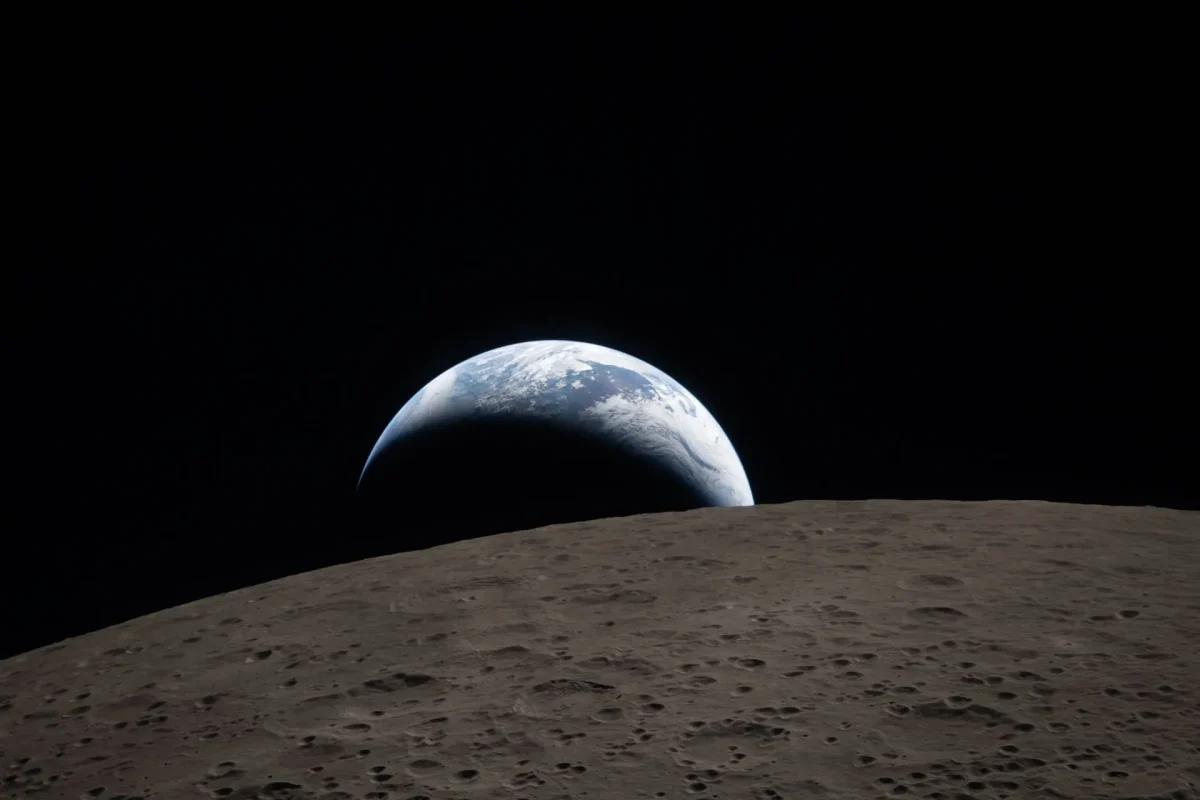
NASA launches Artemis II, the first manned flight of the Artemis Mission
In 1969, Apollo 11 did what no human thought possible: put humanity on the Moon. Between 1968 and 1972, the National Aeronautics and Space Administration (NASA) sent 11 crewed Apollo missions, with six of them successfully landing on the Moon.
One of those missions, Apollo 13, set the record for the farthest humans ever travelled into space. Apollo 17 was the final mission, despite NASA originally planning a total of 20 manned flights to the Moon.
After the Cold War space race was over, public interest waned, NASA faced large funding cuts and the missions to the Moon were deemed too expensive. Despite NASA shifting its attention away from the Moon, their work didn’t stop.
The International Space Station (ISS) was first launched in Nov. 1998. It is the first space station built and maintained through international cooperation between five space agencies.
Despite the premature end to the Apollo program, NASA was determined to get to the Moon again. The Artemis program was first established in 2017 with the goal of putting humanity back on the Moon and preparing for deep space travel to Mars. Artemis, twin sister of Apollo in Greek mythology and goddess of the moon and the hunt, was to be the namesake of the new program.
Artemis I was an uncrewed lunar test flight and was designed to test new technologies like the Orion spacecraft and the Space Launch System rocket. It was launched in Nov. 2022 and lasted 25 days.
Artemis II was to be the first manned Artemis flight. The main goal of this mission was to test the life support capabilities of the Orion life support systems. Four astronauts would man the ship and be the first to leave low-Earth orbit since 1972.
The mission launched on April first and the world got to watch and experience the mission unlike any other. Due to NASA’s Deep Space Network communication and navigation capabilities, the astronauts were taking videos, posting on Instagram and doing live calls.
Reid Wiseman, the commander of the mission, previously served as flight engineer aboard the International Space Station (ISS) for a 165-day mission.
Victor Glover, the pilot, served as a pilot for the Crew-1 Dragon spacecraft that flew to the ISS. In addition, he was a naval aviator and test pilot. He is now the first Black astronaut to travel to the moon.
Christina Koch, mission specialist, experienced living and working on the ISS and spent a total of 328 consecutive days in space. She also participated in the first all-female spacewalk. This mission makes her the first woman to travel to the Moon.
Jeremy Hansen, a Canadian astronaut serving as a mission specialist, has worked at NASA’s Mission Control Center in Houston.
During the trip, the astronauts passed the time by assessing the life support system, practicing emergency procedures, testing the radiation shelter, performing science experiments and closely observing the Moon for the first time in over 50 years.
Artemis II also broke the record set by Apollo 13, travelling a total distance of 252,756 miles from Earth.
They touched down in the Pacific Ocean on Apr. 10. The mission has been hailed as a major success for the Artemis program.
This is far from the last mission to the Moon for NASA. Artemis III is scheduled to launch in 2027 and will assess the docking capabilities of the Orion spacecraft, which is necessary for landing on the Moon’s surface.
Artemis 4 and 5 are scheduled to launch in early and late 2028. These missions will see astronauts on the lunar surface since Apollo 17. After that, NASA has subsequent lunar landings planned roughly once a year with the goal being to get humans to Mars.
Wiseman, in a press conference before the launch, is hoping to inspire the next generation of space explorers.
“[You] talk about what is our legacy, I don’t want to look 5 or 10 years into the future, I want to look a 100 or 200. Honestly, I hope we are forgotten. If we are forgotten then Artemis has been successful and we have people on Mars and we have humans in the moons of Saturn, maybe we have invented something we never even dreamed of,” said Wiseman.