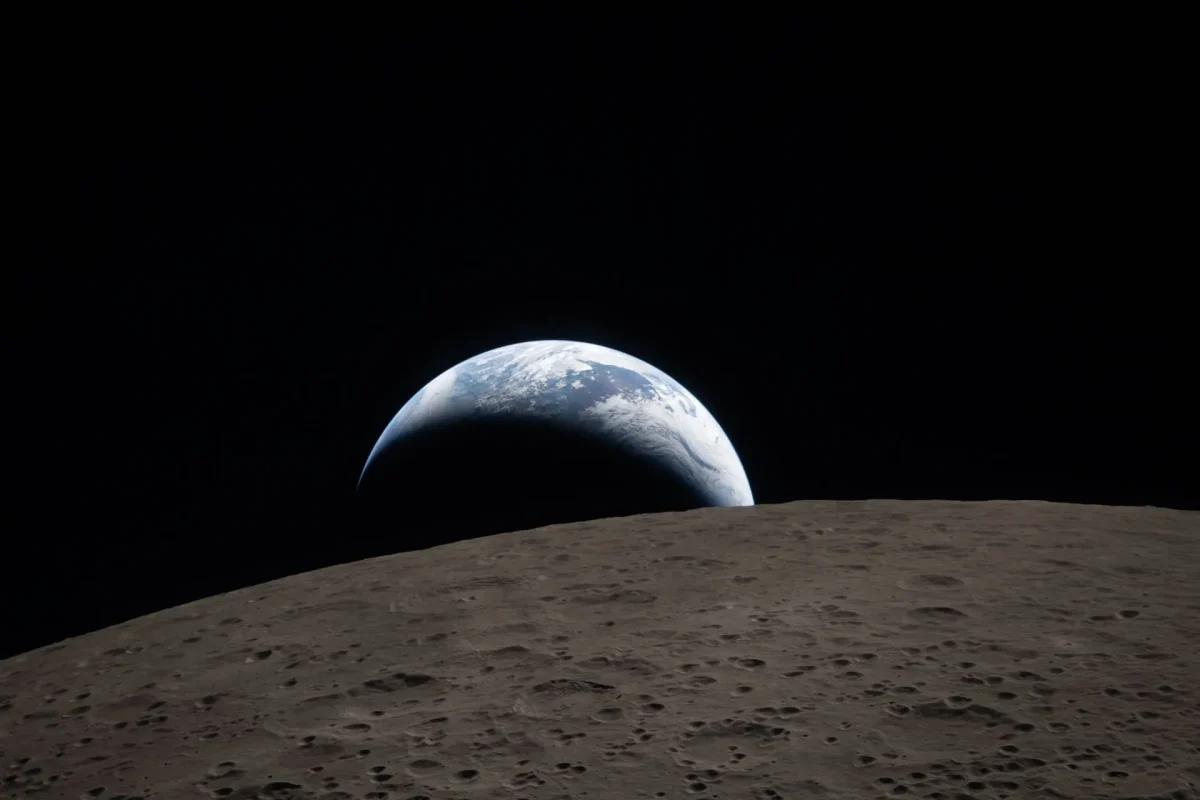




The fifth annual International Digital Media and Arts Association (iDMa) Folk Media Conference was held from Oct. 9-11. The conference, normally held over the summer, was instead held during the Fall semester to give students the opportunity to participate and visit the conference.
The theme this year was Folklore and the role that it plays in the digital world. Throughout the week, workshops, performances, exhibitions and presentations were held. Artists, Winona State University faculty and students all showcased their art at the conference.
Davin Heckman, a professor in the Creative Digital Media (CDM) program, is the conference chair and in charge of organizing the conference each year. Every year he works with the Winona community to encompass the theme.
“It’s a lot of people being very generous, but in the end it’s a product of effort. I like things that are unsettled and that only exist because people want to make them happen,” Heckman said.
Scott Pollock at the Minesota Marine Art Museum (MMAM) reached out to Heckman, expressing that the MMAM wanted to contribute this year. Faculty at Winona State help with events and present their own work. Students in various classes were able to present their own work with the help of their professors.
Dante DeGrazia, a Winona local, performed and spoke on his creative practices at Acoustic Café. Events were also hosted at No Name Bar, the Winona State Campus, Broken World Records and the MMAM. The conference is a culmination of people within the Winona community chipping in and showing up.
“The students that I’ve had directly participate, they’ve had a chance to show their work to professional peers. It’s very good for students to be able to be able to talk with a group of professionals that are working in their fields. Most importantly, they actually take them seriously. We want our students to achieve at a high level and to put their work out there with confidence,” Heckman said.
One event, Folking Around with Code: Midwest Cryptids, showcased work from students in the CDM lab course. Each student was to pick a cryptid that they wanted to explore. Once they had a cryptid picked, the students worked with an AI system to write a program showcasing their cryptid. They only used dialogue prompts to work with the AI to write the program.
Each student described the difficulties and headaches that come with working with AI. One student described it as a “tragic rabbit hole” and another said it “optimized the code to dysfunction.”
Four students were at the showcase: Sierra Gudel, Nick Weiser, Bug Kemper and Mackenzie Stammeyer, all fourth-year students either majoring or minoring in CDM.
Stammeyer, who chose the Man-Bat from the Lake La Crosse area, talked through her process of teaching the AI.
“Working with folklore cryptids and having to train an AI what your cryptid is so that you can get what you want was interesting. You’re being told that AI knows everything and it’s very evident through this process that it doesn’t and it’s still learning,” Stammeyer said.
While showcasing their work, the students also discussed the more controversial aspects of AI use in the arts. They raised questions such as, when a machine generates code, who is the author? What is the value of the skill? How does the use of AI affect our environment and is it worth it?
Weiser, who chose the Lake Pepin Monster, otherwise known as Pepie, enjoyed being able to push boundaries with AI.
“AI is a very controversial topic to talk about. Whether on the ethical side or if it’s good for the environment or on a professional side. Who gets credit for the creation of works? I think for us in the CDM program, it allows us to push the boundaries of what we can create and also see what’s out there,” Weiser said.
Artists from around the world were able to explore what folklore meant to them at the Folk Media in the Digital Age Exhibition. It was held throughout the conference at the Laird Norton Center for Art and Design. Curated by Negin Ehtesabian and Patrick Lichty, the exhibition showcased around 20 international artists.
“We believe that folklore culture did not finish with the digital age. Just the way you deliver the message and layers beneath the stories has changed. So, narrative culture continues on social media and all these digital platforms. [The artists] are facing the future of AI and automation, so they’re all kind of inspired by that,” Ehtesabian said.
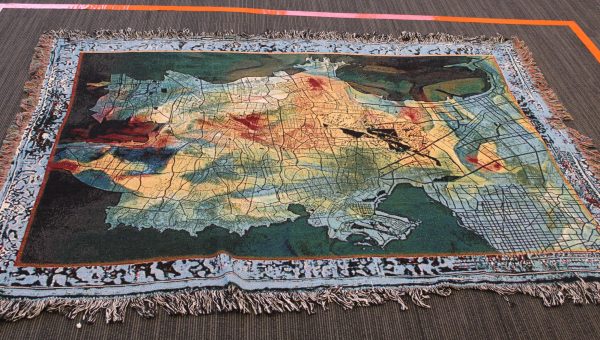
One exhibit in the middle of the hall was titled “The Invisible Country” and consisted of a tapestry laid on the floor with messages of home surrounding it. The artists were Negin Ehtesabian and Patrick Lichty.
They created the tapestry to show the “imaginary country of us.” It highlighted the places they have lived together and the places they called home. Attendees were encouraged to contribute to the exhibit by writing on post-it notes about what home meant to them.
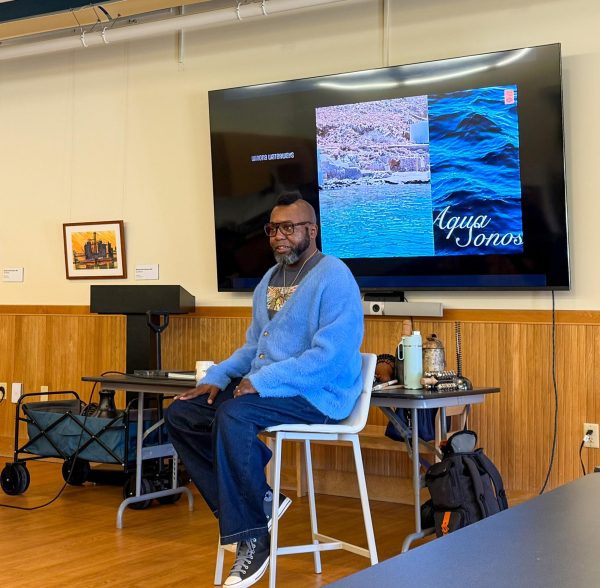
Dameun Strange, the artist in residence at the MMAM and a graduate student at the University of Minnesota in the School of Music for composition, was the keynote performance to end the conference.
His performance, “As Above So Below,” is a culmination of his work with graphic scores and his experiences with water. Having had a fear of water all his life, he wanted to explore how water influences who we are and how it can be used in an artistic way.
Strange learned from some Dakota friends about how the Mississippi River can be viewed as a reflection of the Milky Way. Combining how important the Mississippi River is for both the Dakota and for slaves escaping the South, he had found his theme for the piece.
Prior to his performance, he held a workshop where he walked people through his process. He invited the attendees to share their own stories with water and how they’ve shaped who they are.
While the theme for next year is still up for debate, this year’s exploration into folklore and the role it will continue to play in our growing digital age created many discussions. People attending the conference were urged to explore what folklore meant to them.
“I think there’s going to be something for everybody. I think people will be tempted to pick the things they know they want, but I want people to take a chance on things that put a little question mark over their head,” Heckman said.