



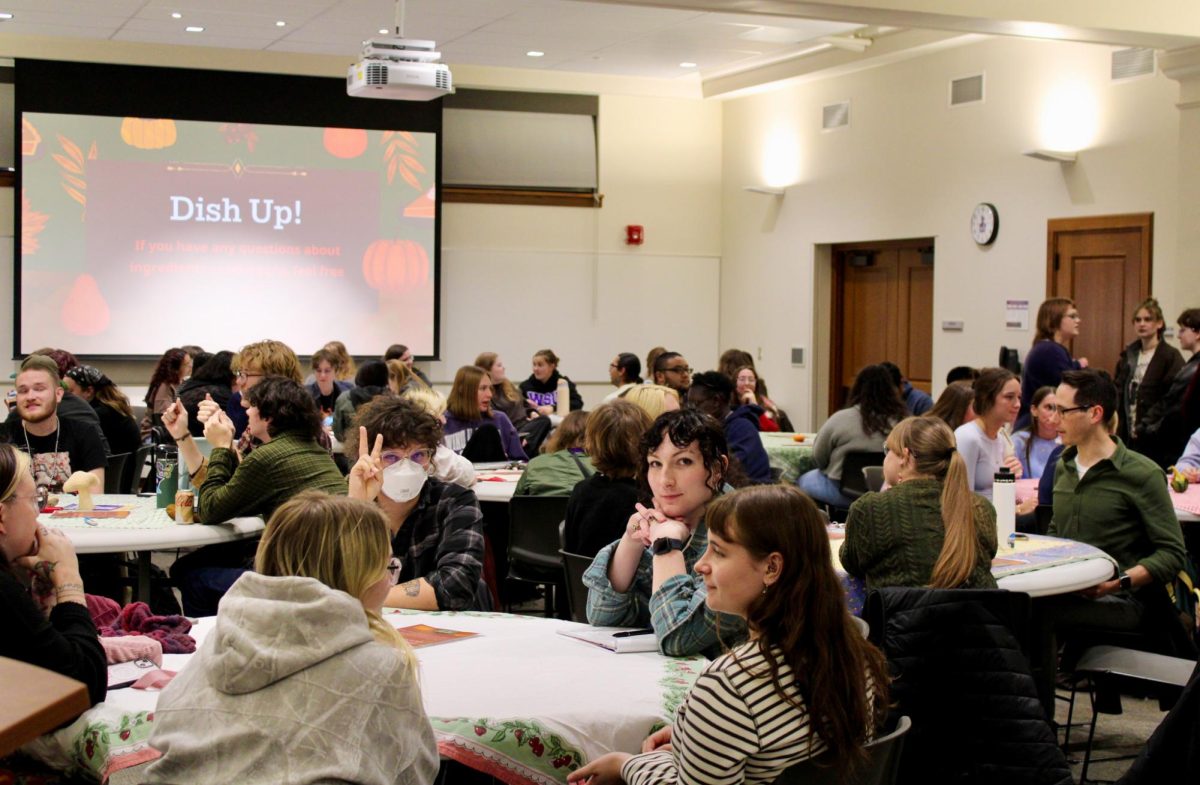
Political tensions are high throughout the world and it’s no surprise that this is affecting college campuses across the United States. In times like these, many minorities are subject to feeling unsafe or unheard. To combat this, Winona State University’s cultural and identity-based organizations and clubs gathered on Thursday, Nov. 12 to provide a safe space for students to assemble. Their event, an Anti-Colonial Potluck, was intended to inform attendees about the effects that colonialism has on minorities and to share a meal while learning about what can be done to better support one another.
To start off the event, leaders of cultural and identity-based campus organizations introduced themselves and their clubs. Organizations included Black Student Union (BSU), Hmong American Student Association (HASA), PRISM, Student Organization of Latinos (SOL) and Turtle Island Student Organization (TISO). These clubs defined anti-colonialism and gave their definitions of anti-colonial politics. Second year student Perla Ibarra, president of the SOL, explained her club’s definition.
“Anti-colonial politic means refusing to disappear,” Ibarra said. “It means looking at systems built to silence us and speaking louder. It’s reclaiming our languages, our stories, our joy and the things that colonization tried to strip away because we know colonization didn’t end. It just changed its name. Now it shows up as borders, detention centers and fear in our parent’s eyes when ICE drives by. We are first generation dreamers carrying the weight of sacrifice in our backpacks, the hope of whole families in our graduation programs. We walk through halls that were never built for us, sit in classrooms that weren’t meant for our names, and take up space anyway. We are proof of what the children of so-called ‘dangerous illegals’ can do. We are proof that resilience is inherited, that power can come from pain and that our existence is not a gift. It’s a right we claimed with every step our parents took across that border. Our anti-colonial politics is love. It’s to find its survival and turn it into celebration.”
Along with members of the student body and cultural and identity-based organizations, Winona State President Kenneth Janz was among the 104 event attendees. Janz recognized the importance of safe places on campus for students to connect with their communities, which is what the Anti-Colonial potluck provided.
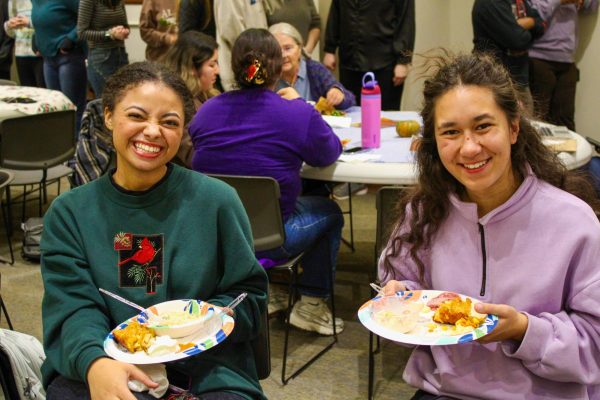
“One of the things we always talk about at Winona State is community and belonging and this is a subset of our community that needs to be supported,” Janz said. “Look at the people in this room. I think it just lets people know that ‘hey, I do have a community around me and I do belong to something greater.’ To me, that’s the important thing. Given our very divisive political environment, I think it’s very important that people feel they have a sense of community.”
The Anti-Colonial potluck provided students with a safe place to gather, express themselves and learn about the impact that colonialism has had and continues to have on minorities of all kinds.