



Federal Immigration and Custom Enforcement (ICE) activity has been the topic of discussion since Operation Metro Surge began in Dec. 2025. It initially targeted the Twin Cities but has expanded to all of Minnesota. Thousands of agents have flooded into Minnesota creating tension and leading to the detention of U.S. citizens among various rights violations.
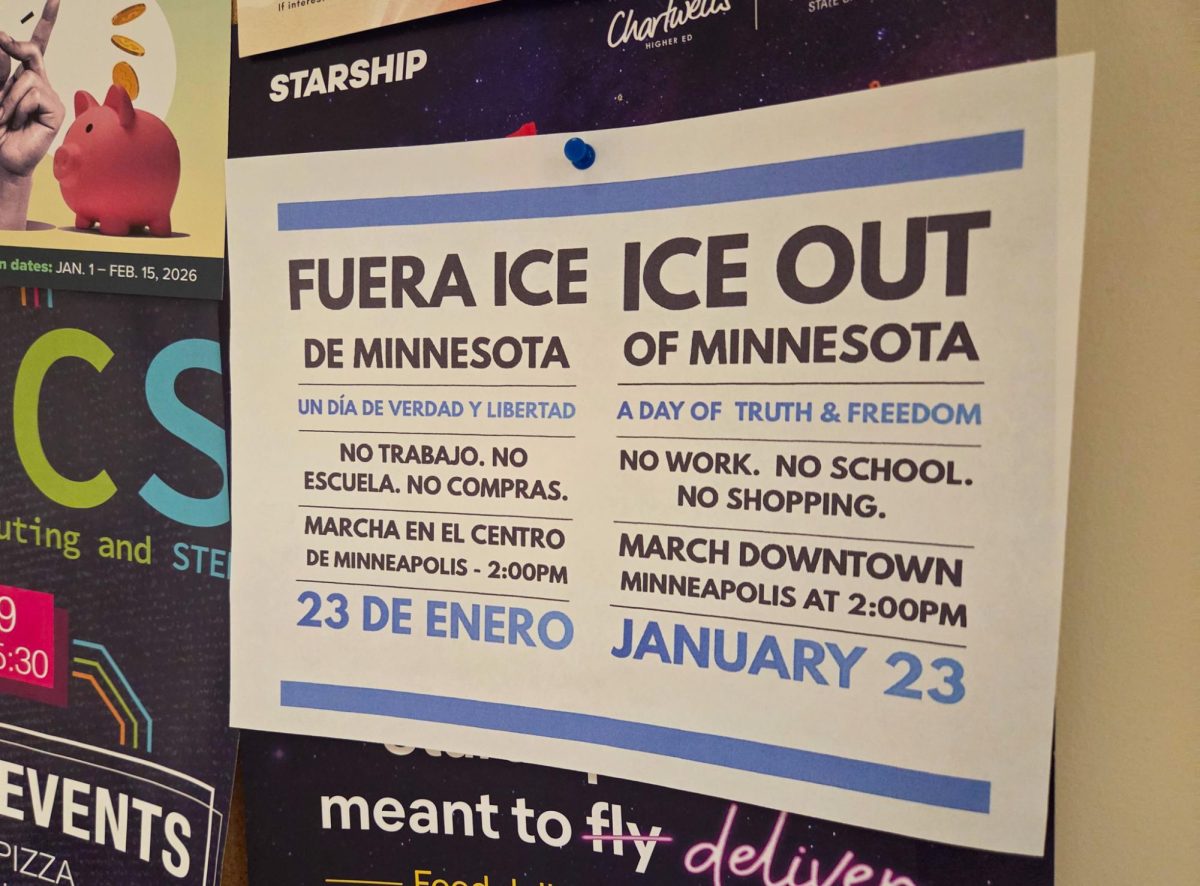
One month into 2026, Minnesota has seen two U.S. citizens shot and killed by ICE agents. On Jan. 7, Renee Nicole Good, a 37-year-old mother of three, was killed by an ICE agent. This was followed by the killing of Alex Pretti, a 37-year-old Veterans Affairs nurse, on Jan. 24. Both killings have led to statewide protests including a general strike held on Jan. 23 which led to hundreds of businesses closing and thousands of protesters hitting the streets of Minneapolis.
Although it sits over a hundred miles from Minneapolis, ICE activity has been reported in Winona. During a Winona City Council meeting held on Jan. 20, Mayor Scott Sherman shared a statement confirming an ICE presence in Winona. The Winona Police Department (WPD) also confirmed that federal agents were in the area on Jan. 16 and 22. The WPD was notified when they were coming and going from Winona. A member of the Winona Rapid Response team reported that at least two Hmong American men were detained.
But what does all this mean for Winona State University? On Jan. 22, Winona State sent out an email regarding the recent immigration enforcement activity in Minnesota. In the email, they made it clear that although there has been no reported ICE activity on campus, many students may be feeling uncertain regardless.
Denise McDowell, the vice president for student life and development, helped craft the email.
“Students had a number of questions for us in reference to transparency, what they can and cannot do and what they should expect. So what we’re doing is trying to be very intentional about announcements that we put out sharing resources that our students have at their disposal,” McDowell said.
The resources listed were counseling services, Mantra Mental Care Hub, a link to the Immigrant Law Center of Minnesota with know your rights information and a link to the Council on American-Islam Relations Minnesota website. There was also information provided on being a responsible bystander.
After the killings of Good and Pretti and the violence that has been directed to legal observers by ICE, McDowell stressed the importance of not interfering with ICE operations.
“The other thing we try to encourage is don’t be accused of interfering or obstructing what the law enforcement people are trying to do because what that does is turn the attention onto our behavior rather than keeping the focus on theirs,” McDowell said.
Winona State has been creating plans to ensure students and faculties safety should ICE come to campus. Typically, the campus would be notified by the WPD if ICE were in the area, as long as they themselves were notified.
However, reports from the cities have shown that ICE is not following the typical procedure. Homes are being invaded even if a warrant is not presented, US citizens are being arrested and detained when they have no criminal charges against them and people are being denied the constitutional right of due process.
If ICE is sighted on campus, students are being directed to notify campus security and the Title IX office first. ICE agents will then have to work with Winona State and provide the necessary credentials and warrants. If the credentials and documents that they carry are official and verified, they can be on public space because Winona State is a public institution.
“We will walk campus [with them] and we will make sure our students are not in harm’s way. The thing that we have to be careful of, our students, colleagues and others need to understand, is that the campus cannot keep someone from being detained. We cannot interfere with that process,” McDowell said.
Even if ICE is not on campus, many students still have the events happening in the Twin Cities in the back of their minds. Karina Kpahn, a fifth-year public health major with an emphasis in community health and the president of the reproductive justice club, has friends and family in the Twin Cities. She has been struggling with finding things to do to help.
“I don’t know what else to do because they don’t care about the law. They don’t care about the idea of being prosecuted. I feel like a lot of other young people might feel the same sentiment of ‘well I’ve marched, what else can I do?’” Kpahn said.
Reproductive Justice, the Turtle Island Student Organization (TISO), the Student Organization of Latinos (SOL) and the Black Student Union (BSU) have hosted events in the past to give students a safe space in times of trouble.
Last semester, TISO with the help of the other clubs, hosted an anti-colonial potluck. At the potluck, they hosted an Indigenous speaker to give a talk. There have been talks amongst the clubs for making the potluck a recurring event. ICE activity has encouraged them to host another.
“There were talks of SOL, the Student Organization of Latinos, organizing it and inviting a Latino speaker to come to campus. I’m hoping this semester we can do a lot more coalition work. It’s important to create a space on campus for marginalized students to be in community with one another,” Kpahn said.
On Jan. 31 a federal judge denied a request by the Minnesota state government to put an end to Operation Metro Surge. Lawsuits and investigations are underway to determine if the killings of Good and Pretti were unlawful. The continuing ICE operation is showing its toll with declining school attendance, increased police overtime costs and hardships for citizens and businesses.
It is yet to be seen when the operation will end but the response from Minnesotans in the form of crisis response groups and thousands of dollars in aid is showing the perseverance of a winter people.