


“Don’t join the book burners. Don’t think you are going to conceal faults by concealing the evidence that they ever existed. Don’t be afraid to go into your library and read every book,” said former President Dwight Eisenhower during a commencement address at Dartmouth College in 1953.
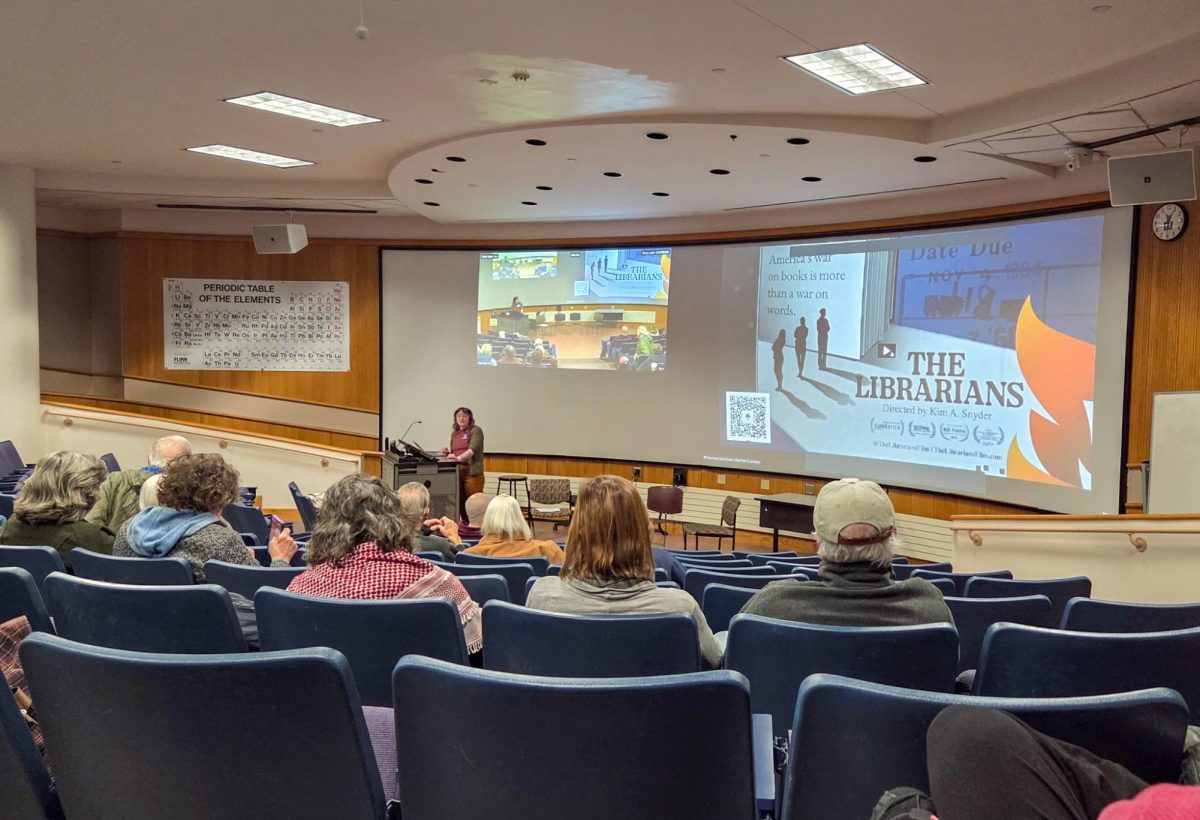
“The Librarians,” a documentary released in 2025, follows librarians and citizens as they navigate the book bans that have spread across the country in recent years. Littered with quotes from literary classics, like “Fahrenheit 451” by Ray Bradbury and “1984” by George Orwell, the film came to the defense of books and the librarians who keep them.
In Fall 2021, Texas State Representative Matt Krause compiled a list of 850 books to be reviewed by school districts. He targeted books that could cause students discomfort or stress regarding race or sex. Among the list was books about LGBTQ issues, race and sex education.
After the announcement, books started disappearing from school libraries, starting in Texas and spreading across the country. The librarians of these libraries were often asked to take books off the shelves with little to no explanation. One librarian featured in the film was fired for simply asking too many questions.
Being on the frontlines, the librarians received harsh backlash not only from their school districts but also from their own communities. Many would receive death threats and were threatened with felony charges. Throughout the film they continued to attend school board meetings, show up for their students and defend the challenged books.
April Herndon, a professor in the English department, helped make the screening possible. ENG120 is typically filled with students not majoring in English but rather trying to fulfill a general elective. After 20 years of teaching, Herndon decided to take the class on for the first time.
The theme changes from year to year and this year Herndon chose the theme to be banned books.
“I wanted to teach the class with the theme of banned books because I think we’re at a cultural moment when having discussions about the issues many banned books deal with—race, class, gender, sexuality, ability, immigration status and so forth—is incredibly important,” Herndon said.
The students got the opportunity to read some of the banned books themselves, hear about the objections toward them and discuss their thoughts with the class. Many of the books they are reading this semester are featured in the film.
Herndon approached the Winona State University librarians about collaborating to bring the screening to life.
“I felt it was important that students understand the consequences of book banning in a full and detailed way, which the documentary offers. I also wanted them to understand librarians as people who defend access to information and work deliberately toward inclusion,” Herndon said.
Kayla Olson, an engagement and liaison librarian at Krueger library, helped organize the event and gain public performance rights for the film. A public performance license allows them to screen the film in public for an audience.
Several departments, offices and colleges sponsored to event such as the English department, the college of education, the office of equity and inclusive excellence, the college of liberal arts and the Darrell W. Krueger library.
“Because we received these funds, we were able to purchase the full digital streaming license with public performance rights, allowing us to provide a hybrid screening with continued access to the film over time,” Olson said.
After the screening, there was a panel of librarians from the area who were asked questions about the film and about their experiences.
Aurora Jacobsen, an engagement and liaison librarian also at Krueger library, helped put together the panel. She first saw the documentary last year at the St. Paul international film festival. Having worked at a public library, she resonated with the struggles that the librarians in the film go through.
“I started in libraries in the early 2000s. For nine years between 2013 to 2022 we occasionally would have challenges [on books]. Then it really changed. It went from ‘yeah, that wasn’t for my kid’ to ‘I’m going to create a list and I don’t want any of the things on this list in the library,’” Jacobsen said.
Bill Ives, a librarian for the La Crosse public library, believes that libraries are safe spaces and a place for people to come and see themselves in the books they’re reading.
“When a child has the opportunity to see themselves in a book and see a positive story of what their life can be and see that representation, that’s as impactful as having an affirming adult in their life. That’s what some of these [banned] books are providing,” Ives said.
The documentary ended on a bittersweet note. The featured librarians made it clear that this would continue to happen, but they were determined to stand their ground and fight for their libraries and students.
“We don’t often think about librarians as defenders of rights because they don’t usually carry signs or use bullhorns but their work holds up pillars of democracy and human rights by facilitating access to information that allows for an informed citizenry,” Herndon said.