



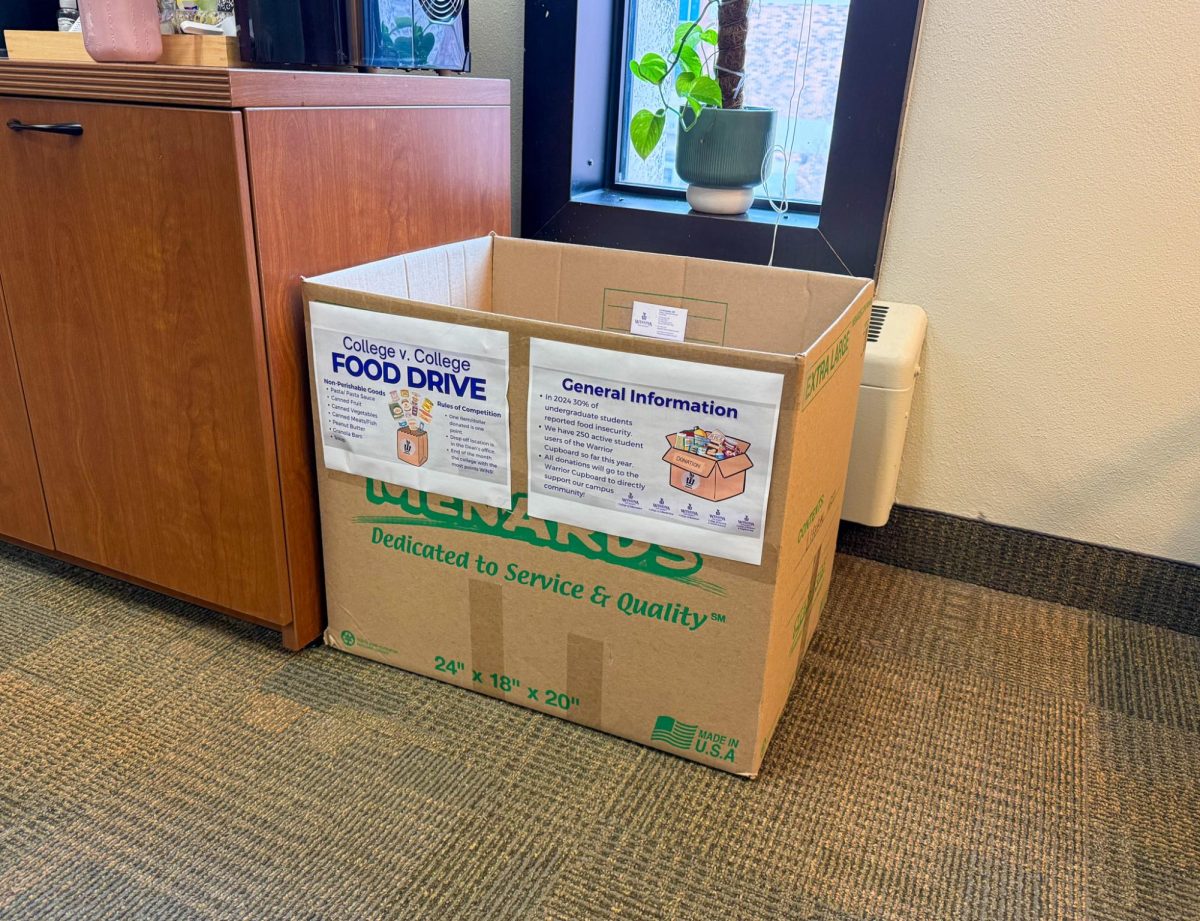
For over 300 students at Winona State University, the Warrior Cupboard is crucial for their health and success during their schooling. Winona State has made a commitment to work towards a hunger free campus to allow students to be able to focus on other things in life such as their jobs, schoolwork, and personal time. This need is found across the country, and the month of March serves as a time to bring awareness to the work foodbanks are providing for thousands of people.
Throughout Minnesota, a government-sponsored campaign to advance donations to local food pantries is run throughout the month of March, creating a food and fund drive known as Minnesota Foodshare Month. The Greater Minneapolis Council of Churches (GMCC) has run this drive for 45 years and promises every year to match and distribute the amount raised by food shelves across the state.
In participation in this event, Liz Schwanke, Winona State College of Business Advising Coordinator, ran a college vs. college food drive competition on campus during the past month. Donation boxes were set up in each of the five colleges as well as the library for staff, students and faculty associated with each college to fill with non-perishable items. For every item or dollar collected, the colleges earned one point. The competition was run for the first time in March of 2025, drawing in over 3800 products and dollar donations, and that number was far surpassed this year. In just one month, the Warrior Cupboard collected 7,402, with the College of Education taking the lead, having earned 3363 points.
Schwanke expresses amazement in the participation throughout campus, and the enthusiasm that the Deans and President Janz have towards the event. She highlights smaller competitions that were held within individual colleges as well.
The College of Nursing and Health Sciences held a competition between staff and faculty, then pooled their funds to the larger campus-wide competition, and the College of Business split drives between student works such as marketing, finance, etc. and offered a social at Nate and Ally’s for the winner of the drive, paid for by the Dean. Small events such as these help to draw attention to the cause and bring communities together to support the larger population. Schwanke encourages everyone to continue to donate even after the competition if they can, as every bit helps. “It’s everybody chipping in a little bit, that is how you make the most difference,” Schwanke says.
Aurea Osgood, Director of the Warrior Cupboard, is extremely grateful for the efforts put in by staff, students and faculty around campus. While the Cupboard receives $6,000 from the University through student fees, that amount only covers about 20-25% of the total budget spent throughout the year, so it is largely dependent on donations.
Osgood is also appreciative of the community that the event builds surrounding hunger and limited accessibility to food. “Awareness [is important], not just for students knowing the resource is there, but reminding our entire campus that there are students that need this resource,” Osgood said.
The competition serves the campus in several ways. “It’s a fun way to try and build more community, especially after March, when everyone’s been cooped up all winter long,” Schwanke said, but she also knows that it is a great way to remind people that the Warrior Cupboard needs donations all year long, even during the summer. While all donations are helpful, the cupboard likes to emphasize the importance of fresh fruits and vegetables, dairy products and proteins such as meat, peanut butter, and eggs.
The Warrior Cupboard makes it possible for everyone on campus to get basic nutrition, and they welcome every contribution to help make sure those needs are met. The Foodshare campaign during the month of March reminds us that it takes a community to create a better world for everybody, and even small actions can create a lasting, positive impact on the people around you.